Bayou Teche SOLAR PROJECT OVERVIEW
Size

95 Mwac of solar energy.
Location

Power generation

Environmental Benefits
Economic Benefits

Project Life

Bayou teche SOLAR PROPOSED PROJECT TIMELINE
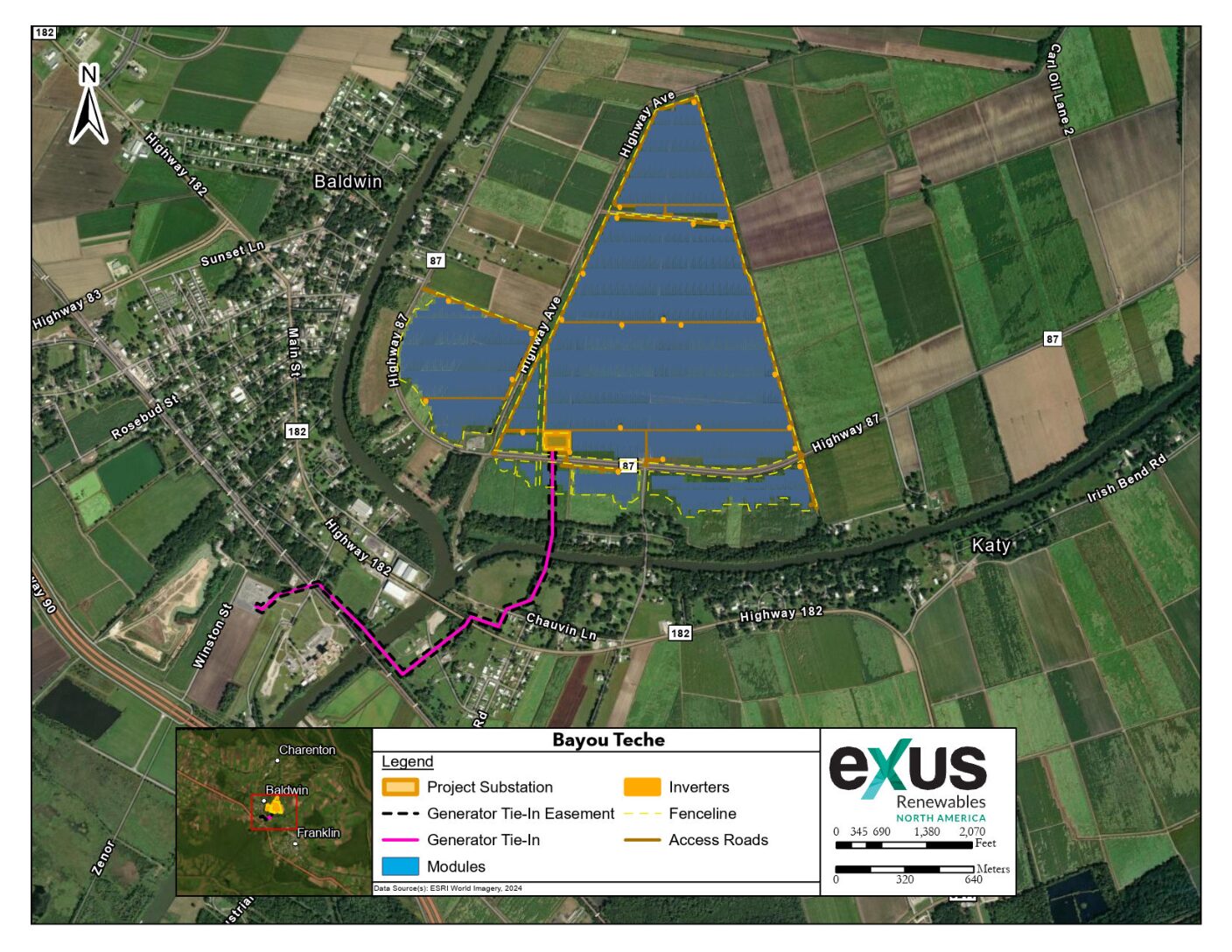
bayou teche SOLAR PROPOSED PROJECT - PARCEL MAP
FREQUENTLY ASKED QUESTIONS
Do solar panels impact human health?
How does the weather impact solar energy production?
How will wildlife in the area be impacted?
We understand the concern about wildlife, especially residents who know the land and the animals that move through it. The project has finished the environmental review and consultation process and will comply with applicable permit requirements and guidance. As a part of the project development process, we are actively evaluating local knowledge, buffers, corridors, and site layout considerations.
How long will the project be in operation for?
Bayou Teche Solar will be operational for 35 years, with the potential to be repowered as solar module technology evolves.
Can solar panels be recycled?
Yes, solar panels can be recycled. When the project is at the end of its life, all components will be properly handled through a decommissioning plan. Bayou Teche includes recycling of materials, such as concrete and steel, in its decommissioning plan, which will be reviewed by St. Mary Parish.
Is the project permitted WITHIN ST. MARY's PARISH?
Bayou Teche Solar has an active Specific Use Permit, under Ordinance Number 2407, with the St. Mary Parish Council. As part of this agreement, the project must meet standards and obligations of St. Mary Parish, including a site plan, emergency response plan, and decommissioning plan.
Will the solar panels cause glare?
Will the project impact nearby property values?
Available data does not show consistent negative impacts to nearby property values, particularly when projects are properly sited, screened, and maintained. The St. Mary Parish Unified Development Ordinance includes proactive steps to protect community interests, including requiring setbacks, and a vegetation management plan to help minimize visual impacts and maintain compatibility with surrounding properties.
WILL OUR ENERGY BILLS BE IMPACTED BY THIS PROJECT?
The project does not set or control local electricity rates. Electric bills are determined by the local utility and energy regulatory process. This project will add new energy generation to the grid, helping support a more reliable, diversified energy supply over time.
How will agricultural activity be impacted?
The project will change the agricultural use of the property during the life of the solar facility. The site is currently used primarily for commercial sugarcane production, and that acreage would transition to solar energy production while the project is operating. However, unlike many residential, commercial, or industrial developments, solar does not permanently convert land. At the end of the project’s operating life, the facility would be decommissioned, with the goal of leaving the land in a condition that allows for an appropriate future use, which could include agriculture depending on conditions at that time.